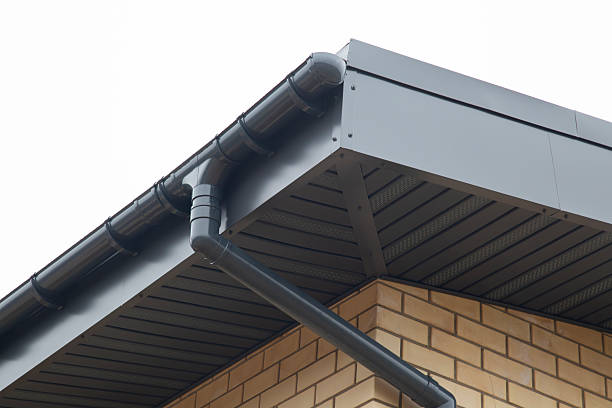
Material choices affect more than the appearance of a gutter system. They can influence weight, corrosion resistance, seam count, maintenance needs, and how well the gutters fit the roofline. Anyone comparing gutter companies near me should ask specific questions about the products being installed, not just look at a price or a color sample.
What Gutter Material Is Being Recommended, and Why?
Start by asking what material the contractor plans to use and why it fits the house. Aluminum is common on residential systems because it is lightweight, does not rust like steel, and can be formed into long sections. Other materials may be available, but the right choice depends on the home, budget, roofline, and local conditions.
A good gutter company should be able to explain the recommendation without hiding behind vague terms like “premium” or “heavy duty.” Ask how the material handles corrosion, dents, expansion, and routine maintenance. The answer should connect the material to the actual property rather than sounding like a one-size-fits-all sales pitch.
Are the Gutters Formed Seamlessly or Joined in Sections?
Seamless gutters are formed in long runs, which reduces the number of joints along straight sections. Fewer seams can mean fewer places where leaks may develop over time. Corners, outlets, and end caps still require connections, so “seamless” does not mean the entire system has no joints at all.
For gutter installation, ask where seams will be located and how they will be sealed. Long gutter runs, inside corners, and roofline changes may affect how sections are laid out. A contractor should be able to explain the plan before work begins, especially on homes with multiple roof sections or complicated eaves.
What Size and Profile Are Available?
Gutter width and profile should match the roof design and expected runoff rather than being chosen only by habit. Many homes use K-style gutters, including 5-inch and 6-inch options. Larger sizes may be useful in some situations, but overflow can also come from clogs, poor pitch, blocked outlets, or heavy runoff from roof valleys.
Ask whether the rain gutter installation includes matching outlets and downspouts sized for the system. A wider gutter paired with a restricted outlet can still drain poorly. The contractor should look at the whole path from the roof edge to the final discharge point instead of discussing the gutter trough by itself.
What Kind of Hangers and Fasteners Will Be Used?
Material quality is not limited to the gutter itself. Hangers, screws, brackets, and other attachment hardware affect how well the system stays in place. Poor support can lead to sagging, low spots, or sections pulling away from the fascia even when the gutter material is still in good condition.
Ask how the hangers are spaced and what condition the fascia board is in before installation. Weak or deteriorated fascia may need attention first. Fasteners should also be appropriate for the material and attachment surface so the gutter run keeps its intended pitch and does not loosen under water or debris weight.
How Are Downspouts, Outlets, and Elbows Matched to the System?
Downspouts carry water away from the gutter, so their material and size should be part of the conversation. A system with undersized or poorly placed outlets may back up during heavy rain even if the gutter itself looks adequate. Elbows and straps also need to fit the downspout without creating awkward angles or weak connections.
Some contractors use 3×4 downspouts on residential systems where more discharge capacity is useful. Ask where each downspout will empty and whether extensions or splash blocks are needed. Water should be directed away from entry areas, landscaping, siding, and other spots where repeated runoff can become a nuisance.
Are Gutter Guards Compatible With the Material and Layout?
Gutter guards can reduce the amount of larger debris entering the trough, but they do not make gutters maintenance-free. Leaves, roof granules, seeds, and smaller material can still collect depending on the guard design and surrounding trees. Some systems also handle concentrated roof valley runoff better than others.
If guards are part of the quote, ask how they attach and whether they affect access for cleaning. The guard should be compatible with the gutter profile, roof edge, and fasteners. Comparing gutter companies near me should include how each contractor handles future maintenance, not just how the guard looks on installation day.
Ask for Material Details Before Choosing a Contractor
Material questions often reveal how carefully a contractor has looked at the house. Good answers should cover the gutter profile, metal, hangers, outlets, downspouts, seams, fascia condition, and discharge plan. If those details are difficult to judge from the ground, a professional inspection can give a clearer picture of what the roofline actually needs.
Apollo Roofing serves Huntsville with residential gutter installation, repair, replacement, cleaning, and maintenance services. The company also works on roofing systems, which can be helpful when gutter problems are tied to fascia damage, roof-edge conditions, or drainage issues along the eaves.